
Table of Contents
Introduction to Bhavai Dance
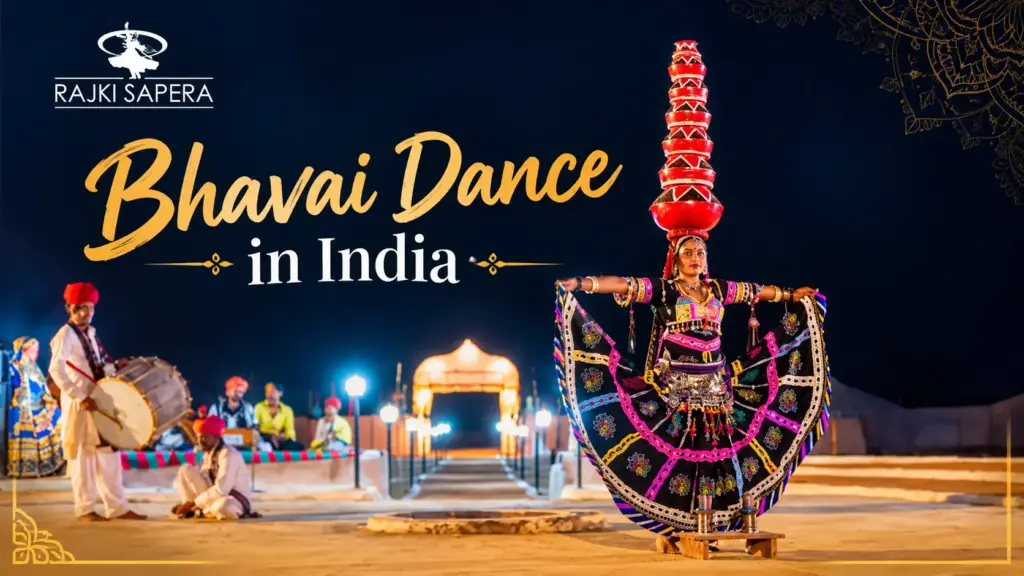
Bhavai Dance is one of Rajasthan’s most remarkable folk performances, celebrated for its graceful movements, colorful costumes, and extraordinary balancing skills. Traditionally performed by talented women, the dance involves balancing multiple earthen or brass pots on the head while moving rhythmically to traditional music.
The performance demands exceptional concentration, physical control, and years of practice. A dancer may begin with one or two pots and gradually add more, eventually balancing six, seven, eight, or even nine pots. At its most thrilling moments, performers may dance while standing on a glass, brass plate, or the edge of a sword.
For cultural performances and traditional entertainment, Rajki Sapera showcases the vibrant artistic heritage of Rajasthan through skilled folk performers and engaging stage presentations.
History and Cultural Roots
The history of the bhavai dance of Rajasthan is connected with the deep folk traditions of western India. Some accounts associate its early development with Gujarat, where similar balancing performances were practiced before the tradition became strongly associated with Rajasthan.
Other traditions suggest that its roots are deeply connected with Rajasthan’s own cultural history. Over time, communities including Bhils, Raigarhs, Jats, Kumhars, and others contributed to the development of folk performance traditions associated with Bhavai.
The art is also considered to have connections with older folk theatre traditions. As these traditions developed, balancing, music, storytelling, and rhythmic movement became an important part of the performance.
Today, Bhavai Rajasthani dance is performed during cultural celebrations, festivals, weddings, tourism programs, and large-scale events. Its combination of suspense and elegance makes it particularly memorable for audiences experiencing Rajasthan’s folk culture.

The Art of Balancing Pots
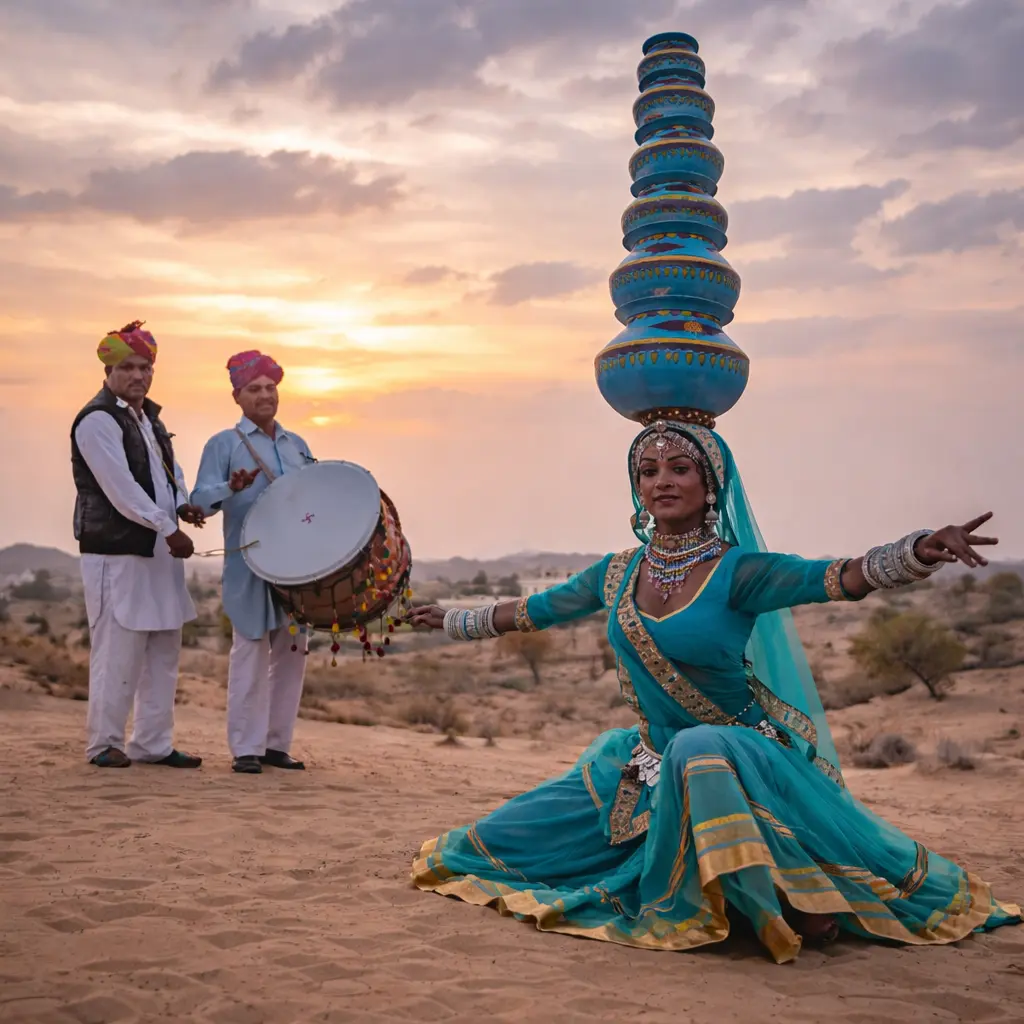
The most recognizable feature of rajasthani bhavai dance is the extraordinary balancing act. Performers carefully place decorated brass or earthen pots one above another on their heads before beginning their movements.
As the performance progresses, additional pots may be added. The dancer must maintain posture and balance while turning, swaying, spinning, and moving in rhythm with the accompanying music.
The difficulty increases when performers introduce challenging elements. Some artists demonstrate their skills while balancing on the edge of a sword, a glass, or a brass thali. These moments create suspense while demonstrating the precision and confidence developed through extensive training.
The artistry is not simply about balancing objects. Every movement must remain graceful and synchronized with the music. This is what makes the performance both technically impressive and visually beautiful.
Costumes, Music and Performance Style
Traditional performers wear colorful and elaborate costumes inspired by Rajasthan’s rich cultural heritage. Flowing skirts, embroidered fabrics, traditional jewelry, and veils create a striking visual effect as the dancer moves across the performance area.
The music is equally important. Male performers traditionally provide vocal accompaniment while playing instruments such as pakhawaj, dholak, jhanjhar, sarangi, and harmonium. The changing rhythm supports the dancer’s movements and builds anticipation during the balancing sequences.
The history of the art also includes notable performers. Mrs. Krishna Vyas Chhangani of Jodhpur is widely associated with the early recognition of this performance tradition in India. Her contribution helped bring greater attention to the demanding skill and artistry involved in the form.
Bhavai Dance in Jaipur
Jaipur provides an excellent setting for experiencing Rajasthan’s traditional performing arts. Visitors and event organizers can encounter bhavai dancers in Jaipur at cultural programs, weddings, festivals, heritage events, and private celebrations.
Professional bhavai dancers combine traditional movements with carefully rehearsed balancing techniques to deliver a captivating stage presentation. Their performances can add an authentic Rajasthani character to destination weddings, cultural evenings, corporate events, and tourism programs.
Rajki Sapera brings the spirit of Rajasthan’s folk traditions to audiences through energetic and visually engaging cultural performances. For event organizers seeking traditional entertainment, a skilled folk dance presentation can create a memorable experience while highlighting the region’s artistic heritage.
Why Bhavai Continues to Captivate Audiences
What makes Bhavai Dance special is the combination of beauty, skill, suspense, and cultural storytelling. The audience watches as the performer gradually increases the number of pots while maintaining perfect balance and rhythm.
The visual impact becomes even stronger when the dancer introduces advanced balancing techniques. Every turn and movement requires confidence, making the performance feel both graceful and thrilling.
For people searching for bhavai dancers in Jaipur, this traditional art offers an opportunity to experience an important part of Rajasthan’s folk identity. It is particularly suitable for celebrations where guests want something distinctive beyond conventional entertainment.
The continued popularity of this art demonstrates how traditional performances can remain relevant in modern events. From heritage festivals to destination weddings, bhavai dancers help preserve and present Rajasthan’s artistic traditions to new audiences.
Business Name: Rajki Sapera
Address: 276 bhojpura colony, 22 Godam Cir, Durgadas Colony, C Scheme, Ashok Nagar
Contact No: +1 6375349994
Frequently Asked Questions
1. What is Bhavai Dance?
Bhavai is a traditional Rajasthani folk performance known for graceful dancing while balancing multiple pots on the head.
2. How many pots can a dancer balance?
Highly trained performers can balance as many as seven, eight, or nine pots while dancing and performing intricate movements.
3. Where can I see Bhavai performances?
You can experience traditional performances at cultural festivals, weddings, heritage events, tourism programs, and other celebrations across Rajasthan.
4. What instruments accompany the performance?
Traditional musical accompaniment can include pakhawaj, dholak, jhanjhar, sarangi, and harmonium, along with male vocal performances.
5. Why is this dance considered difficult?
The performance requires exceptional balance, concentration, coordination, flexibility, and years of practice, especially when dancers perform on glasses, brass plates, or sword edges.

